
COMPANY
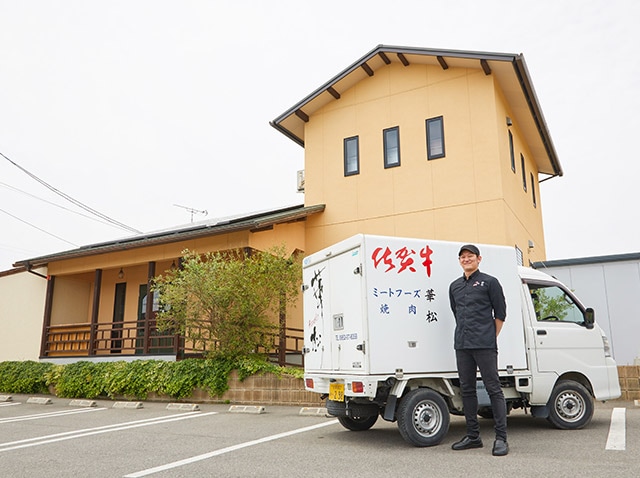
We at Meat Foods Hanasho are a meat wholesaler based in Saga, Kyushu that has devoted ourselves to Wagyu beef Su.
Wagyu beef in Japanese retail stores for 12 years
We will continue to buy one piece and utilize our experience to find the best parts for each part
We have provided high quality products.
We also provide advice on the optimal usage and cooking methods for each part, and provide advice to our customers
“Glamorous food A joy” is being delivered.
Based on our desire to “deliver the best Wagyu beef to the world”, we are committed to quality, reliability, and support systems
I’m particular about the bottom line.
We can provide a stable supply of Wagyu beef and provide local support.
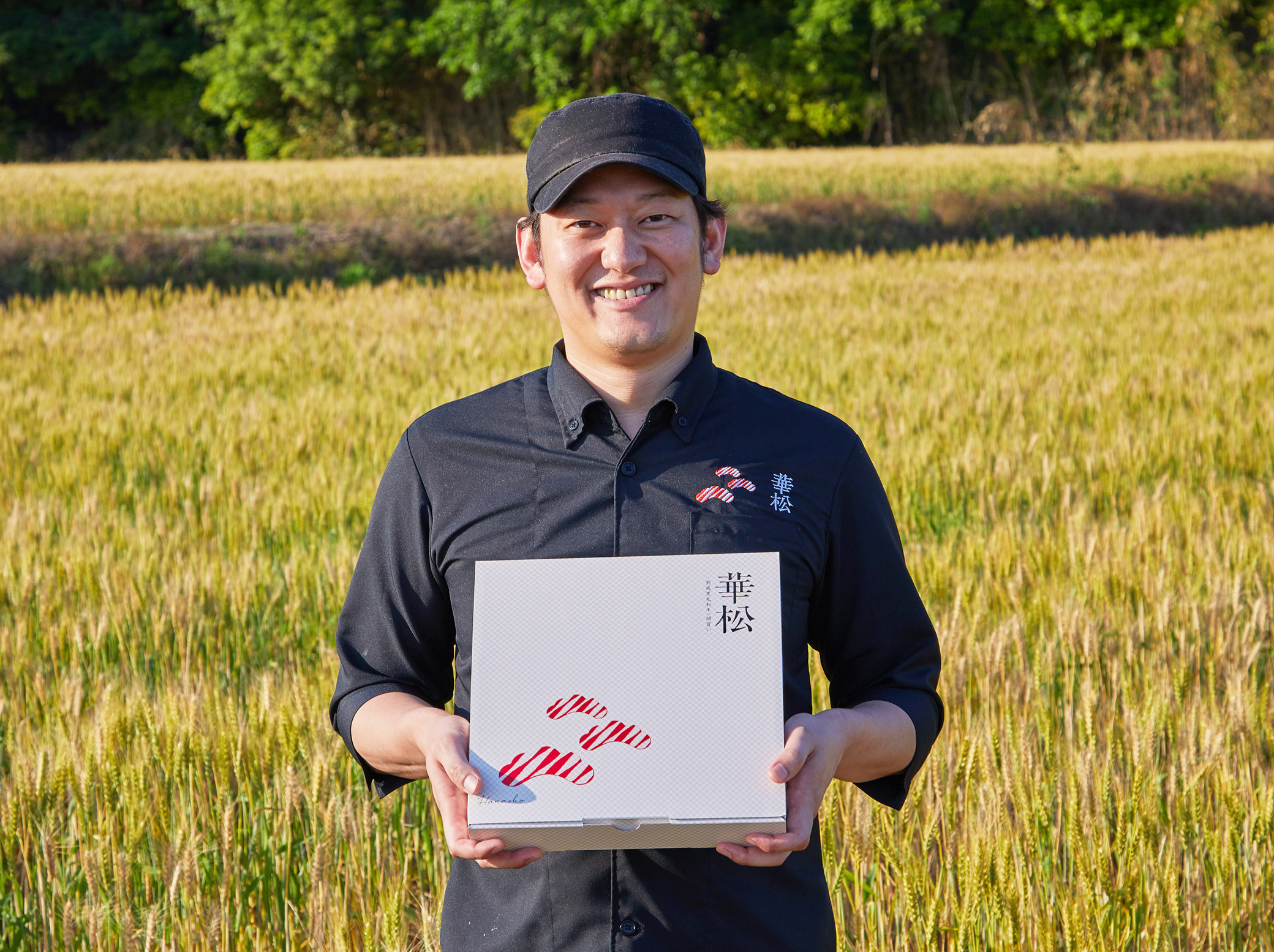
We are looking for a partner who can import high-quality Wagyu beef in a stable manner.
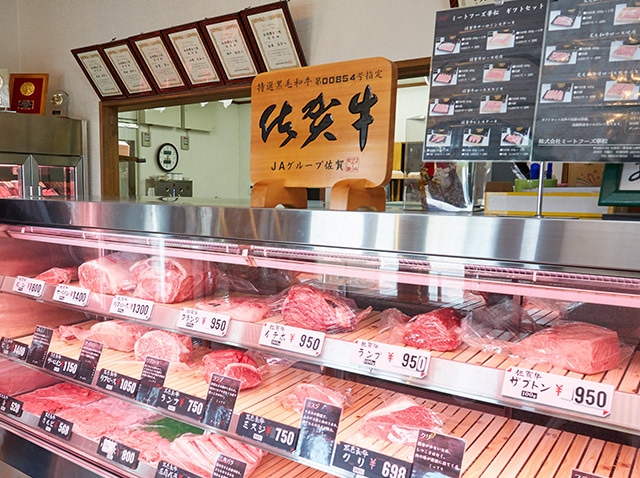
We want to handle Wagyu beef to meet the needs of overseas customers.

They are also seeking local support for transactions and cutting after import.
Meat Foods Hanasho can solve all of your worries.
“Carefully Selected” Oita Wagyu Beef – Hanasho’s Pursuit of Quality
Thorough standards for selecting even the foster parents
Oita Wagyu is a type of wagyu beef guaranteed to have a quality of grade 4 or higher.
Hanasho only purchases from producers who are extremely particular about the breeding environment and feed they use.
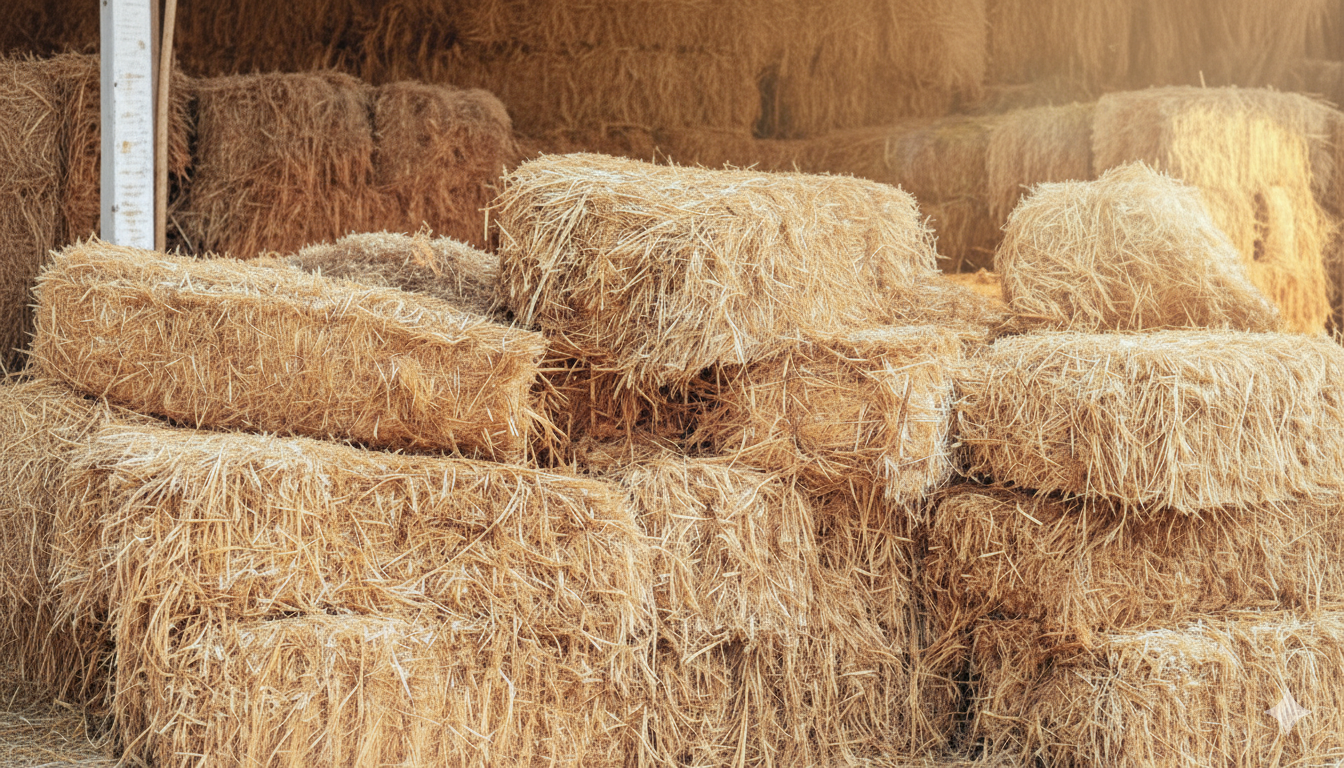
Grown from the earth, it melts in your mouth with exquisite flavor.
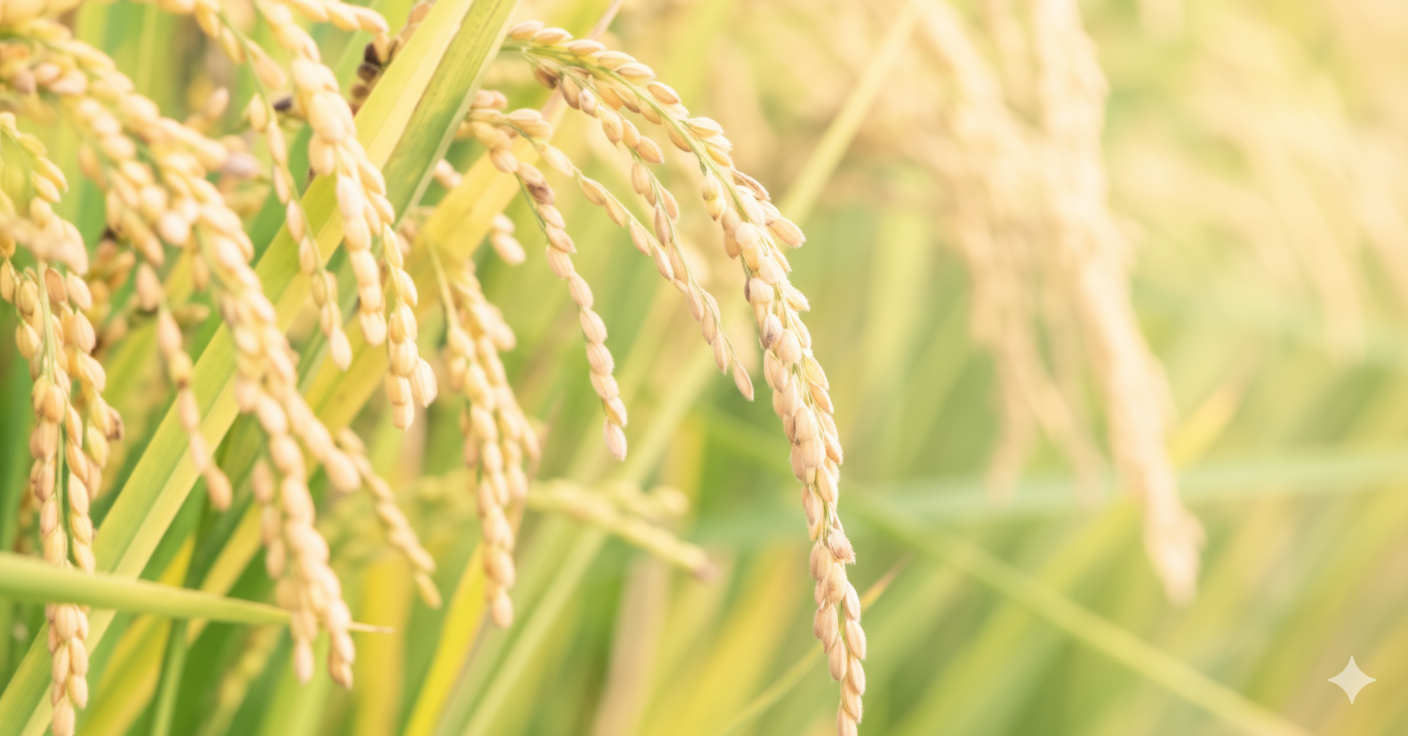
By using straw from Oita Prefecture and sweet, mineral-rich rice as feed, the beef contains a lot of oleic acid, which makes it melt in the mouth better than other beef, and further enhances its flavor and aroma.
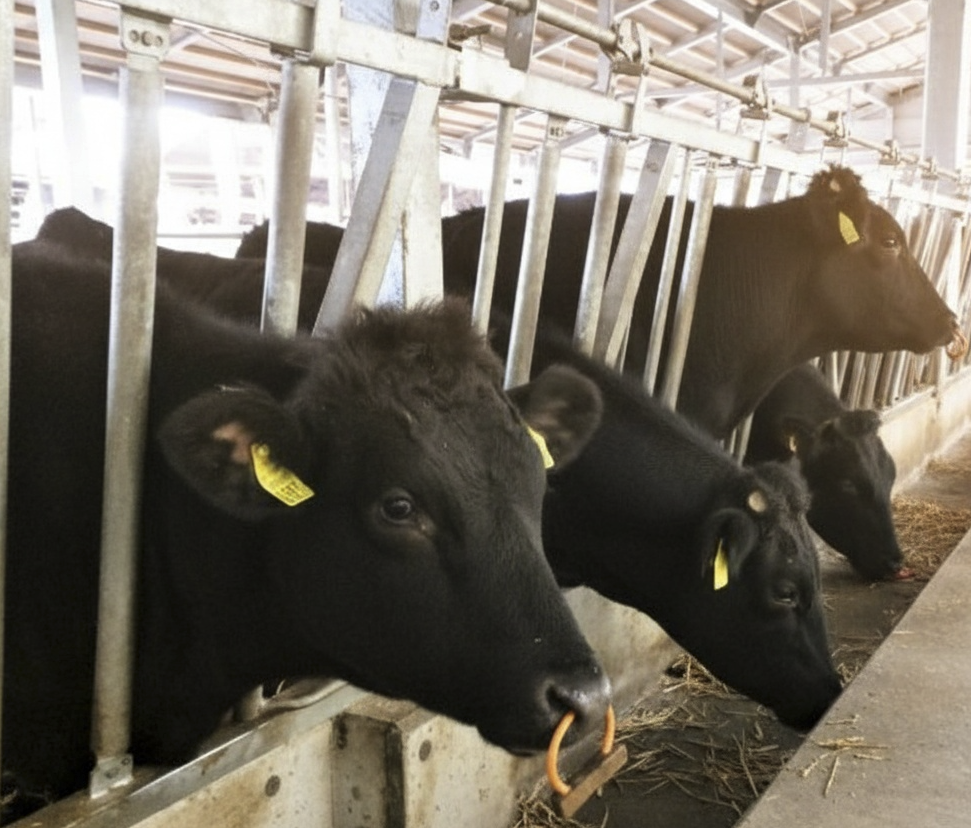
The authentic Wagyu beef experience that the world desires
We will deliver the “true deliciousness” of Oita Wagyu beef, carefully selected by Hanasho, to buyers around the world.
Reliable after-sales support and commercialization guidance.
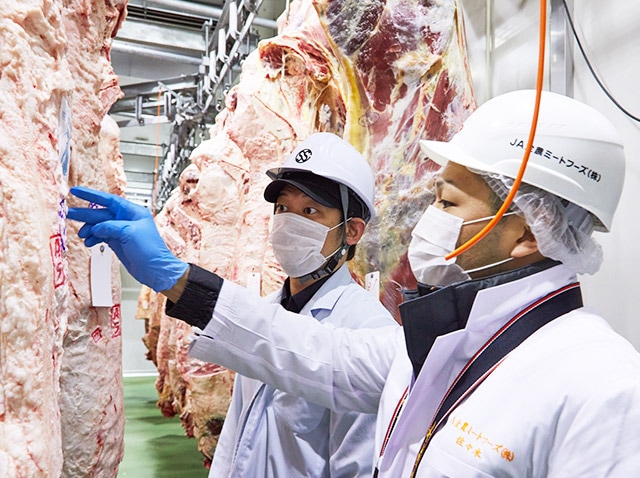
Leveraging its 12-plus years of experience purchasing entire Wagyu cattle, Meat Foods Hanashow
provides support for commercializing products that can be sold locally.
After importing, experienced staff will provide direct, on-site instruction on cutting meat blocks once per cattle.
Even if this is your first time importing or you’re unsure about handling Wagyu cattle locally,
you can trust Hanasho with peace of mind.
Cuts Included in a Full-Carcass Purchase
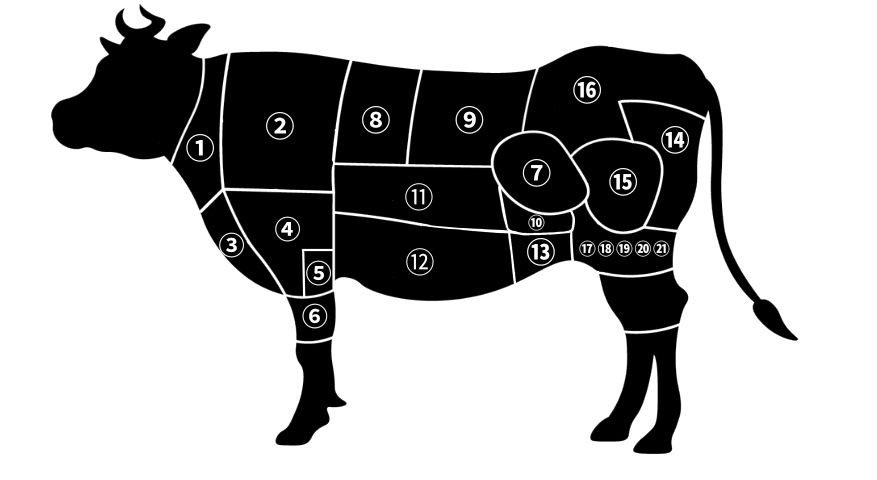
① Neck
The neck is located around the beef’s cervical vertebrae and consists of muscles that are constantly used to support and move the head. As a result, it has thick muscle fibers and contains a large amount of connective tissue and sinew. While the meat is relatively tough, it has a strong umami flavor from the lean meat, and truly shines when used for braising or ground meat. When properly simmered, the collagen transforms into gelatin, becoming tender and developing a smooth texture with rich, deep flavor. It’s particularly ideal for braised dishes such as beef stew, curry, pot-au-feu, and soups, where long cooking times allow it to add depth and richness to the broth. When ground, its intense lean flavor comes alive, and mixing it into hamburgers adds robust character to the dish.
② Chuck Roll
Chuck roll is a cut from the shoulder to the back area, containing a well-balanced blend of muscle and moderate fat. The meat is tender and characterized by fine marbling throughout. It’s versatile enough for various cooking methods including sukiyaki, yakiniku (grilled meat), shabu-shabu, thinly sliced dishes, and steak.
③ Brisket (Shoulder Rib)
Japanese Black Wagyu brisket is the cut from the lower front leg to the chest area, containing abundant sinew and fat. The fibers are coarse and somewhat firm, but when braised, it develops a melt-in-your-mouth texture and brings out rich, deep umami flavors.
④ Chuck Flap
Kainomi is a rare cut that’s part of the plate section, located near the tenderloin. It has a good balance of lean meat and fat, with a crisp texture that’s well-suited for yakiniku.
⑤ Chuck (Ude) and Togarashi
Kuroge Wagyu chuck (ude) comes from the base of the front leg. Being highly exercised muscle, it is somewhat firm but characteristically rich in umami. With a good balance of lean and fat, it is widely used in sukiyaki, shabu-shabu, braised dishes, and yakiniku.
⑥ Shank (Sune)
The shank corresponds to the lower portion of the beef’s four limbs and consists of strong muscle groups developed around the bones. Because it constantly supports body weight and is used for walking and maintaining posture, the muscle fibers are thick and tough, with abundant connective tissue and sinew. It has little fat, is primarily lean meat, and is rich in gelatin. When simmered for extended periods, the collagen dissolves, producing umami and a silky-smooth texture, making it a representative cut for braising, stews, and soups.
⑦ Tenderloin (Hire)
Japanese Black Wagyu tenderloin corresponds to the “psoas major muscle” located on the inside of the spine from the lumbar vertebrae to the ilium, and is a rare cut accounting for only about 2% of the entire carcass. Because it’s rarely used for movement, the muscle fibers are extremely fine with little connective tissue, giving it the most tender texture of all beef cuts. While fat content is modest, it features moderate marbling characteristic of Japanese Black Wagyu, offering elegant and mellow umami. The thick central portion is called “Chateaubriand” and is used for the finest steaks, while the ends are differentiated as “Tête” and “Filet Mignon.” To retain moisture, cooking to rare to medium is appropriate, and cooking methods that maximize the delicate meat quality are required for this cut.
⑧ Ribeye (Rib-rosu)
Ribeye is located in the center of the beef’s back, between the chuck roll and sirloin, spreading along ribs 6-12. Kuroge Wagyu ribeye is one of the cuts where marbling (fat interspersion) appears most beautifully, with fine marbling distributed throughout, resulting in tender texture. When viewing the cross-section, fat is abundant between muscles, so slicing without separating improves yield when used for sukiyaki or shabu-shabu.
⑨ Sirloin
Sirloin is a premium cut located on both sides of the lumbar vertebrae, sandwiched between rib loin and tenderloin. It has a structure primarily centered on the erector spinae muscles with multifidus and spinalis muscles attached around it. It’s a large, well-shaped muscle within the entire beef carcass, ideal for steak cuts. In Japanese Black Wagyu, extremely beautiful marbling (intramuscular fat) often appears in this section, and with fat finely distributed within the tender lean meat, it produces a melting texture and rich umami. Particularly in A4 and A5 grades, the fat has a low melting point, so sweetness spreads the moment it touches your mouth. It’s also a recommended cut for shabu-shabu and sukiyaki.
⑩ Flap Meat (Kainomi)
Flap meat is a rare cut that is part of the belly, located near the tenderloin. With a good balance of lean meat and fat, its crisp texture is well-suited for yakiniku.
⑪ Inside Skirt (Uchibara)
Inside skirt is positioned inside the outside skirt, spreading around the rib area. Compared to outside skirt, it has more lean meat with a good balance of sweet fat and lean umami. Relatively tender, it is widely used in yakiniku and braised dishes.
⑫ Outside Skirt (Sotobara)
Kuroge Wagyu outside skirt comes from the front abdominal area, attached to the outside of the ribs. With thick fat and easy marbling development, it is characterized by rich umami and depth. The fibers are somewhat coarse with satisfying texture, popular as kalbi in yakiniku. A cut where you can enjoy the sweetness of the fat.
⑬ Flank (Sotobara)
Kuroge Wagyu flank is located on the outer side of the shoulder plate, with abundant fat and concentrated umami. The fibers are somewhat coarse with firm bite. In yakiniku, you can enjoy the umami of the belly cuts.
⑭ Outside Round (Sotomomo)
Outside round is a large cut located from the base of the hind leg to the outer thigh, primarily composed of the biceps femoris. Being frequently used for walking and standing movements, the muscle fibers are well-developed and the meat quality is somewhat firm. However, it is rich in lean meat with little fat, known as a cut where you can strongly taste the inherent flavor of beef. As cooking methods, thinly slicing for sukiyaki, shabu-shabu, or yakiniku allows you to fully enjoy the umami of lean meat. When prepared as roast beef, slowly cooking at low temperature can achieve a moist, tender finish. Firmer portions are suitable for braised dishes like curry or stew.
⑮ Inside Round (Uchimomo/Oomomo/Uchimomo-kaburi)
Kuroge Wagyu inside round is a large lean cut on the inner hind leg. While low in fat and fine-grained, it is firm and tends to dry out if overcooked. Thin slices are suitable for sukiyaki and shabu-shabu, while blocks are good for low-temperature roasting or tataki. Since the fibers are long, cutting perpendicular to the grain makes it more tender.For steaks, moisture escapes and becomes dry if overcooked, so slow cooking is recommended for this cut.Depending on how it’s cut, it can be used for various dishes, so it’s necessary to understand the appropriate serving methods.
⑯ Rump/Sirloin Tip (Ran-ichi: Rump + Ichibo)
Japanese Black Wagyu ran-ichi is a lean-centered cut from the base of the hind leg to the lower back, and is a collective term for “rump” and “ichibo.” Rump is fine-grained and tender, with concentrated lean meat umami, ideal for steaks and roasts. Ichibo is the tip portion of the hindquarters, tends to have marbling, and is characterized by juiciness and deep richness. Both have an exquisite balance of fat and lean meat, are highly rare, and are popular cuts at yakiniku restaurants and specialty shops.
⑰ Knuckle (Shintama)
Kuroge Wagyu knuckle is a lean-centered thigh cut located on the inner side of the hind leg base. It is composed of four parts: tomo-sankaku, shinshin, marukawa, and kamenoko.
⑱ Tri-Tip (Tomo-sankaku)
Tri-tip has strong marbling in parts, and despite being round meat, can be commercialized as a marbled steak.
⑲ Knuckle side muscle (Marukawa)
Marukawa is tender and suitable for yakiniku.
⑳ Eye of Round (Shinshin)
Shinshin is tender and can be commercialized as a lean steak.
㉑ Heel Muscle (Kamenoko)
Kamenoko, while having no sinew inside, has firm meat quality, so by cutting it thin for yakiniku or using it for lean slices or trimmings, it can be eaten with relatively little chewiness.
PRICE SIMULATION
| Quantity | 20kg | 1 head (approx. 500kg) Yield67.9% 340kg |
| Unit Price (Yen/kg) | ¥9,000/kg | ¥3,909/kg |
| Product Amount | ¥180,000 | ¥1329,060 |
| Transportation Cost | ¥16,240 | ¥312,000 |
| Transportation related fees | ¥51,400 | ¥78,000 |
※ Sales by individual cuts are accepted for sampling purposes with a minimum order of 20kg or more.
※ This simulation shows reference prices. Actual prices will vary depending on exchange rates and carcass weight, so final quotations will be provided individually.
TRANSACTION FLOW
STEP 1
Inquiry
Please contact us through the form on our landing page. Any questions or concerns can also be submitted through the form.
STEP 2
Quotation
We will provide reference prices based on your desired quantity (per head) and transportation methods (air freight/sea freight).
STEP 3
Contract & Order
After agreeing to the terms, we will conclude a sales contract and confirm your order. ※ Payment options include advance payment or settlement using trade insurance guaranteed by Nippon Export and Investment Insurance (NEXI). To ensure safe and smooth international transactions, please consult with us in advance regarding the detailed terms and conditions.
STEP 4
Export Preparation
We will prepare for shipment by processing and packaging, obtaining necessary quarantine certificates, and completing customs clearance procedures.
STEP 5
Shipment
Transportation will be arranged via sea freight or air freight. Transportation insurance can also be arranged if needed.
STEP 6
Delivery & Import Customs Clearance
After arrival at the destination port, the buyer will handle import customs clearance and tariff procedures to complete the delivery.
FAQ
To which countries and regions can I export?
Supported in the United States, Canada, Australia, Hong Kong, Taiwan, Singapore, Macau, Thailand, Vietnam, New Zealand, the Philippines, and Myanmar.
Is it possible to purchase individual items such as fillet, sirloin, or rib roast?
Yes, you can. Please contact us for details.
How do I pay?
Payment is generally by bank transfer.
How long does it take to deliver?
It depends on the country and the time of year, but we can deliver your order in as little as three weeks after placing your order.
Can you issue product specifications and certificates?
Yes. We can issue various certificates (health certificates, certificates of origin, etc.).
Is it possible to communicate over the phone?
We generally prefer to communicate via email.